.webp)
.webp)

Every affiliate program has a line item that outperforms its budget. It rarely gets a headline in the quarterly review, and it almost never gets a raise. But the most efficient line in your affiliate partner mix likely belongs to creators.
Through the first half of 2026, creators took a smaller share of brand spending than nearly any other affiliate partner type, while converting at a rate that held steady when almost everything else slipped. An analysis of 2,319 North American brands conducted by impact.com found that social media influencers accounted for 4% of clicks and 4% of transactions on 2% of total brand spending.
The gap has less to do with performance than with proof. Creator influence happens in rooms the reporting can’t enter, so it loses the budget argument to partners whose contribution arrives neatly stamped at the moment of checkout.
Where Your Affiliate Partner Mix Money Actually Goes
Pull the spend table apart and things start to get uncomfortable.
According to the same impact.com research, loyalty and rewards partners drew 15% of clicks and delivered 55% of transactions. Content review partners absorbed 26% of brand spending while closing 9% of transactions. Voucher and coupon partners shrank on both ends, sliding from 6% of clicks to three, and from 11% of consumer spend to five.
So money is leaving the discount channels. That much is settled. The question worth asking in your next planning meeting is where it landed, because it doesn’t appear to have found its way to creators.
The pattern repeats outside the annual view. In impact.com's Prime Day 2026 benchmark, which studied 1,364 North American brands, network partners fell from the leading contributor of consumer spend at 46% in 2025 to 21% in 2026. That’s two different panels, two different windows, and the same drift. One quarter is weather. Two panels moving together starts to look like climate.
Meanwhile the affiliate budget allocation story tightened everywhere else. Commissions climbed to 90% of total brand spending, up from 86%, while non-action-based payments fell 19%.
Why Coupon Partners Win the Budget Meeting
Picture what happens during the meeting. Someone has thirty seconds and a slide.
The coupon partner's slide is a straight line. A shopper arrived with a code, the code fired, the order closed, and the commission posted. Cause and effect sit next to each other on the same row. Nobody argues with a row.
The creator's slide is a shrug in chart form. A reel reached eighty thousand people. Four hundred of them commented. Some number of those eventually bought, though the purchase landed nine days later on a different device, after a search, a comparison, and a conversation with a friend. The reel did the persuading but the last link took the credit.
This is the quiet arithmetic that decides which affiliate partner types convert best on paper, and it has very little to do with which ones actually convert. Last-click reporting isn’t neutral. It systematically favors whoever stands closest to the register.
There’s a second hurdle worth mentioning. A coupon partner's sale and an incremental sale are not always the same. Some portion of that clean, well-documented conversion would have happened anyway, code or no code. That’s why it’s important to know what affiliate incrementality reveals about the sales before your next renewal cycle. The tidiest number in the deck isn’t always the most honest one.
What Happens When the Middle of the Funnel Goes Unrecorded
Between the impression and the purchase sits a stretch of the journey nobody bills for.
A shopper watches a creator explain a product. Something lands. They want to know whether it works for their skin, their climate, their budget, or their kid. They comment and they ask. In a well-run campaign that question becomes a direct message, and inside that message the sale is either made or lost.
None of it appears in a standard affiliate report. The impression, click, and purchase are counted. Yet the conversation that turned the second into the third leaves no trace at all. This means the creator who started it can’t be paid for it and the brand that benefited from it can’t learn from it.
Run that system for a few years and you’ll get a predictable outcome. The channel that produces the most influence per dollar accumulates the least evidence, and evidence is the currency of budget meetings.
.png)
How to Make Creator Spend Defensible in Your Affiliate Partner Mix
The argument for creators doesn’t need better rhetoric. It needs a receipt.
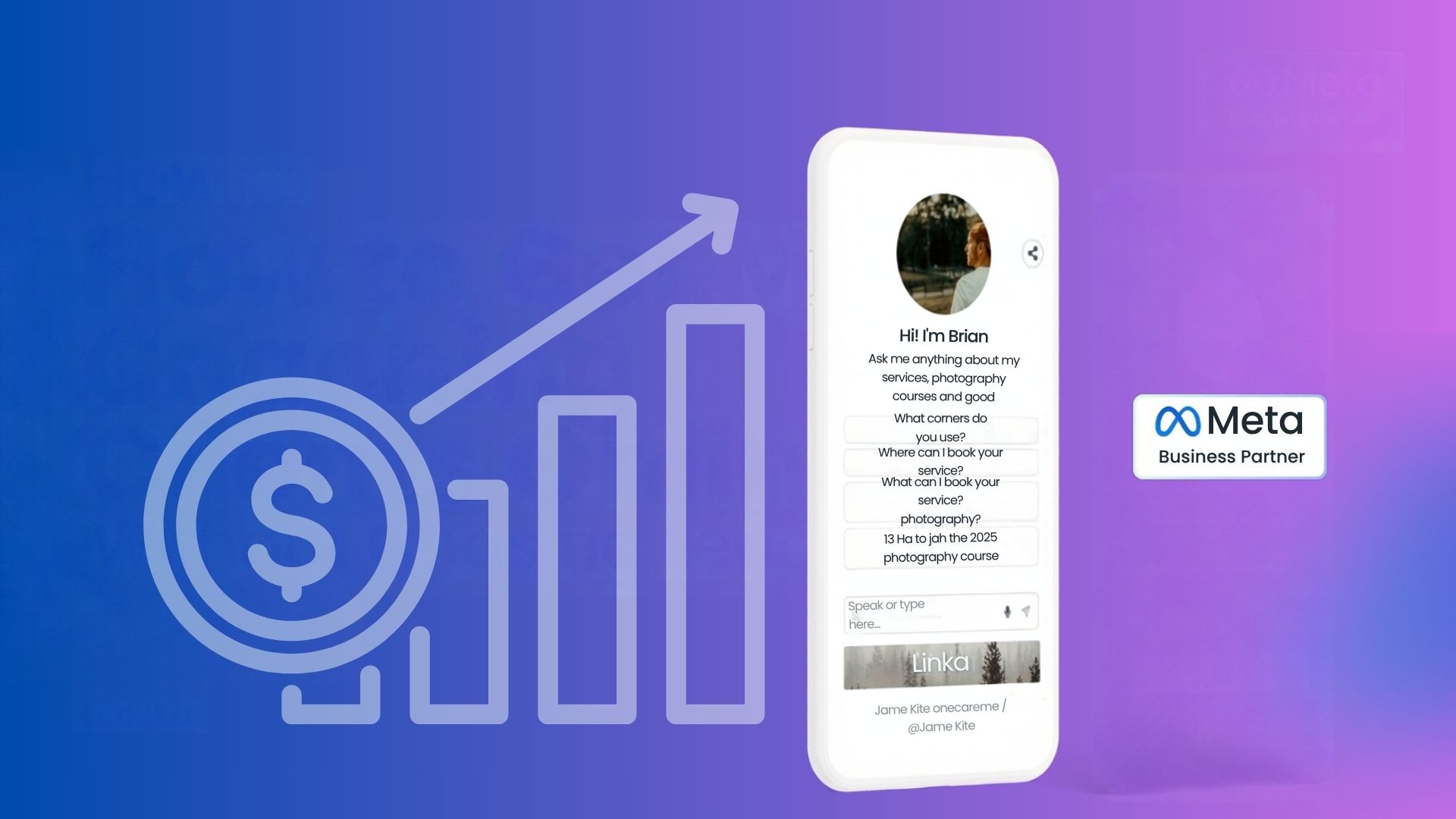
Linka approaches this by making the conversation itself a measurable event. Through Meta DM automation, a comment on a creator's Instagram or Facebook post triggers a tracked direct message that delivers the product, the offer, and a path to purchase. The qualified DM becomes a recorded, compensable step rather than an invisible one, and creators earn on it alongside affiliate commissions rather than instead of them.
From there the trail stays intact. Shoppers move into a dynamic discount conversion page built for that campaign, which holds the product, the creator's recommendation, the offer, and the purchase call to action in one tracked place. Code copies, clicks, leads and purchases all register. Brands can also place approved products inside creators' AI Shops, an always-on multi-brand experience that answers buyer questions between campaign moments.
Practical consequences follow for anyone rebuilding an affiliate partner mix this quarter:
- Creator spend acquires a unit cost, which is the thing coupon partners have always had and creators never did.
- Conversation data shows which products draw questions, which objections repeat, and which creators produce buyers rather than applause.
- Existing creator rosters can be activated and measured without abandoning your current network, since brands can connect through AWIN, Rakuten, CJ, Impact, Shopify or a direct product feed.
- Creator affiliate ROI becomes comparable to every other line in the program instead of living in a separate conversation about brand value.
None of this guarantees a sale. No responsible platform would claim otherwise. What it does is close the gap between what creators actually contribute and what your reporting is able to prove they contributed.
The Line Item Worth Reconsidering
Two percent of spend, 4% of conversions, and a conversion rate that ticked upward in a year when the market's didn’t. Read that on any other row in the report and you would move money toward it before lunch.
The reason nobody has isn’t stubbornness. It’s that the proof lived somewhere the instruments couldn’t reach. Instrument the conversation, and the smallest line in your affiliate partner mix stops looking like a rounding error and starts looking like the place your next dollar belongs.
Ready to see what your creators have been doing that your reporting doesn’t show? Book a call with Linka or explore Linka's affiliate marketing platform for brands to build an affiliate partner mix where creator performance finally shows up on the page.
.webp)