.webp)
.webp)
A sponsored post carries a label anyone scrolling past can see, the hashtag sits above the fold, and the whole system works because the audience and the regulator are looking at the same screen. A direct message has an audience of one, no label, and no equivalent convention, which is why FTC disclosure in Instagram DMs has become a question brands are asking well ahead of any settled answer.
Some of this is genuinely clear. The underlying principles didn't change when conversations moved into a private thread, and pretending otherwise would leave brands more exposed rather than less. Some of it is genuinely unsettled, and this piece marks the difference between the two rather than manufacturing certainty about either.
Brands running creator campaigns should have counsel review their contracts and disclosure practices against their own circumstances.
Why FTC Disclosure in Instagram DMs Sits in Unfamiliar Territory
The FTC revised its Endorsement Guides in 2023, adding a definition of “clear and conspicuous” and noting that a platform’s own built-in disclosure tool might not be adequate on its own. It also clarified its explanation of potential liability across advertisers, endorsers, and intermediaries.
Read those together in the context of a DM campaign and the gap becomes obvious. The built-in tool everyone relies on is Instagram’s paid partnership label, which attaches to a post. A DM thread has nothing comparable, so a brand leaning on the label alone has covered the public half of the campaign and left the private half improvising.
The guidance isn’t silent on private replies, though, and any brand thinking this through should know what’s already sitting there. The FTC’s FAQ works through a case involving a paid ambassador for a trade association who gets asked about the event outside working hours.
Answering on social media needs a disclosure, since followers see the post and some may have missed the earlier ones. Answering by email or text gets treated differently. The reasoning is that someone sending a direct question about the event probably already knows about the affiliation, so a disclosure likely isn’t necessary in that context.
What Counts as an Endorsement Under the Current Guides?
The definition is broader than most brand teams assume. According to the FTC's Disclosures 101 for Social Media Influencers, a material connection covers any personal, family, or employment relationship as well as any financial one, and financial relationships aren't limited to cash changing hands. Free or discounted products count. So do perks. That brochure is staff guidance dating to 2019, so it predates the current Guides, but the FTC still links to it as live guidance and the 2023 revision moved toward broadening these definitions rather than narrowing them.
Several points in that guidance cut against how campaigns often get run in practice:
- Once a brand has given a creator free or discounted products or other perks, mentioning one of that brand’s products calls for disclosure, including a product the creator was never asked to mention.
- Creators can't assume followers already know about a brand relationship.
- The obligation holds even when the creator believes their assessment is unbiased.
- Tags, likes, and pins can themselves be endorsements, not only the captions written around them.
- There's no follower threshold anywhere in the guidance, so the obligation doesn't scale with audience size.
Who Carries the Liability When a Creator Doesn't Disclose?
Disclosures 101 puts the burden on creators, telling them not to count on anyone else to handle it. That's true, but brands shouldn't read it as covering them. The FTC has said that when it does enforce, it usually goes after advertisers, ad agencies, and PR firms—not just the influencer. Outsourcing doesn't change that. Handing a campaign to another company doesn't get a brand off the hook under the FTC Act. A compliance clause in a contract helps, but only if someone's actually watching. A clause nobody enforces won't do much for you later.
What actually protects a brand is a real program:
- Telling creators what they can say
- Showing them how to disclose
- Checking their posts regularly, and following up when something's off
There's also a separate rule to know about. The Guides explain how the FTC reads the law; they're not law themselves. The FTC's Rule on Consumer Reviews and Testimonials, in effect since October 2024, is—with penalties over $53,000 per violation. It targets fake and incentivized reviews more than disclosure, but it shows the space now has real teeth.
What Should a Brand Put in the Creator Contract?
Contracts written for feed campaigns tend to say something general about complying with applicable guidance and stop there. Campaigns that continue into private messages need more specificity, because the creator can't follow an instruction that was never given.
A creator contract compliance clause built for DM campaigns generally covers more ground:
- Definition of Material Connection for This Campaign: Spell out what the brand considers disclosable, including product gifting, commission arrangements, bonuses, and any perks, so nobody has to interpret it.
- Surface-by-Surface Requirements: State the disclosure expectation for the post, the caption, any on-screen text, and the DM thread separately rather than treating the campaign as one surface.
- Supplied Language Rather Than Improvised: Give creators the wording. Affiliate link disclosure requirements are easier to meet consistently when the brand writes the sentence once instead of asking fifty people to invent it.
- Record-Keeping Obligations: Agree what evidence gets kept and for how long, since demonstrating that disclosure happened matters as much as it happening.
- Responsibility for Automated Messages: Address automated DM disclosure directly, covering who approves the message template and who's accountable for what it says.
- Review Rights and Remedies: Establish what the brand can check, how often, and what happens when a disclosure is missed.
Building FTC Disclosure in Instagram DMs Into How Campaigns Run
Disclosure gets more reliable when it stops depending on individual memory. A brand asking fifty creators to each remember a disclosure rule in each message will get fifty different levels of diligence. A brand that writes the language once, puts it in the message template, and keeps a record of what was sent has removed most of the variance from the problem.
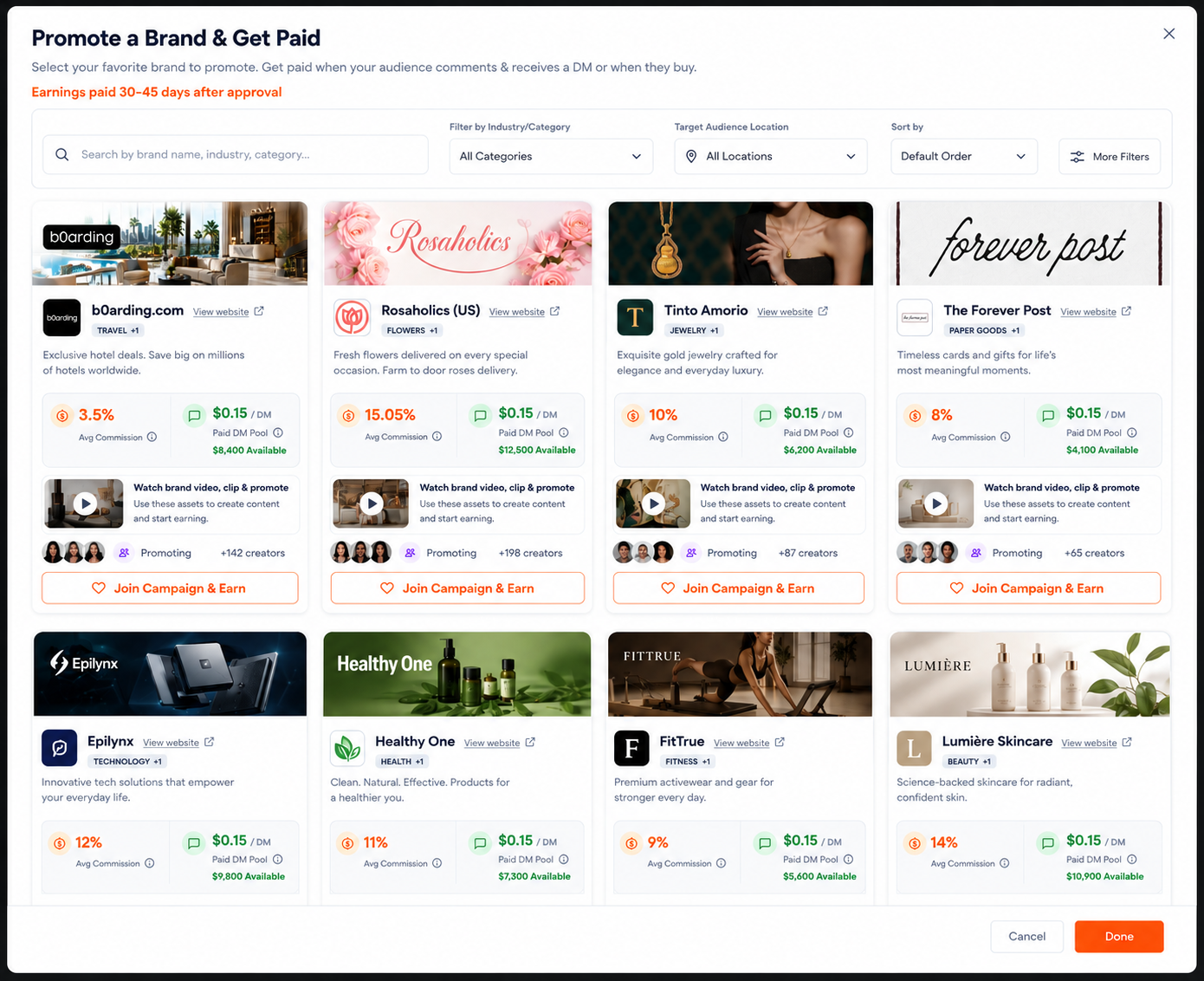
That’s an argument for centralizing the wording rather than an argument for any particular platform. Campaigns on Linka run through comment-to-DM automation built on Instagram’s official messaging API, with the message template configured before anything publishes, which at least makes consistent language possible across a creator network. What that language should say remains a decision for the brand and its counsel, and we’d encourage treating it that way.
One related question sits outside FTC disclosure entirely and deserves its own thinking, which is whether the person in the conversation understands they’re talking with an automated agent. Different law governs that. California’s B.O.T. Act has required bot disclosure since 2019 where an automated account is used to push a sale, and other jurisdictions have since added rules of their own. Whether any of it reaches a private thread on a public platform is its own unsettled question. The point here is that it’s a different question from disclosing a brand relationship, and the two shouldn’t get collapsed into one checkbox.
Linka runs comment-to-DM campaigns through Instagram's official API, which makes this centralization possible by letting brands lock in disclosure language at the template level before a single message goes out.
Questions Brands Ask About FTC Disclosure in Instagram DMs
Do you have to disclose affiliate links in a DM?
The FTC requires clear disclosure wherever an endorsement appears, with no carve-out for private messages. Its closest guidance—an FAQ saying a paid ambassador replying to a direct question probably doesn't need to disclose, since the asker already knows about the relationship—doesn't fit a DM triggered by a public comment from someone unaware of the arrangement. A DM with a product recommendation and an affiliate link looks like an endorsement, so disclose in the DM itself, not just the post. Confirm your approach with counsel.
Who is liable if an influencer doesn't disclose?
The FTC’s 2023 revision clarified its explanation of potential liability for advertisers, endorsers, and intermediaries, and the agency has said its enforcement focus is usually on advertisers and their agencies. Its influencer guidance separately places responsibility on creators to make disclosures themselves. Both can be true at once, which is why brands generally treat contract terms as one part of a program rather than a complete answer, and why the FTC credits companies that can show reasonable training and monitoring.
Is Instagram's paid partnership label enough on its own?
The FTC's 2023 update added a definition of clear and conspicuous and specifically noted that a platform's built-in disclosure tool might not be adequate. That's worth taking seriously for campaigns extending into DMs, since the label attaches to a post and doesn't follow the conversation into a private thread.
Run Compliant DM Campaigns Without the Guesswork
Disclosure shouldn't depend on fifty creators each remembering the rule differently. Linka builds compliant messaging into the campaign itself. Brands set the disclosure language once, and it goes out consistently across every Instagram DM, powered by Meta's official messaging API.
You get full tracking on qualified DMs, clicks, and conversions, plus the paper trail to show it actually happened. Book a strategy call to see how a performance-based creator campaigns can run compliantly from day one, with your legal team looped in early.
.webp)