.webp)
.webp)
A product description can tell you what something is. It can’t tell you whether it’s worth forty dollars more than the thing beside it, which is the only question the shopper is actually asking.
Through the first half of 2026, order values rose because shoppers chose more expensive items rather than more items. impact.com's analysis of 2,319 North American brands found average item value climbed 13%, from $47 to $53, while items per order barely moved, from 2.36 to 2.44. Item choice did roughly four times as much work as basket size.
That shift rewards any brand able to move a shopper from the middle option to the better one, and it punishes any brand relying on a caption to do the persuading. Trading up is a decision made against resistance, and resistance is answered in conversation, not in copy.
This leaves most creator campaigns in an awkward position. They can name the premium option beautifully, yet they go quiet the moment someone asks why.
What Trading Up Actually Looks Like in the Data
The headline number is average order value, which rose from $111 to $130 across the same first-half research. Sixteen percent, in a year when consumer confidence gave nobody much reason to celebrate.
When you pull that apart, the mechanics are unusual. Two things can lift an order value. Shoppers buy more things, or they buy better things. In the first half of 2026 they overwhelmingly did the second.
The obvious objection is inflation, and it doesn’t hold. Adobe Digital Insights reported online prices rising only 2% to 3% through late May. A 13% jump in item value can’t be explained by a 3% jump in price tags. Something else moved, and the something else was preference.
These average order value benchmarks describe a shopper who buys less often and buys better when they finally commit. Fewer trips, heavier baskets, more scrutiny per decision. The kind of customer who reads the comparison page twice.
Where a Caption Runs Out of Road
Watch what happens at the moment of hesitation.
A creator posts about a product. The content is good, the recommendation is sincere, the audience is warm. Someone pauses on the premium version and thinks the thought that decides everything: Is this worth it for me?
The question is specific and personal, and the caption was written for eighty thousand people at once.
So the shopper does what shoppers do. They leave to go find out. They open a search tab, read three reviews of varying honesty, check a forum, ask a friend, and come back four days later having decided something. Sometimes they come back to buy. Often they come back to buy the cheaper one, because nobody was there to make the case for the better one at the moment the case needed making.
The standard advice for handling price objections is to brief creators to lead with the mid-tier or premium option. Reasonable advice, and it stops one step short of useful. Naming the premium option isn’t the same as defending it.
The Price Objection Nobody Hears
Here’s the real cost of that missed moment; the objection itself never gets recorded.
A brand can see that conversion dropped. It can’t see that eleven people in one week asked whether the larger size justified the difference, that four asked about shipping timelines, and that the pattern repeated across three creators in the same vertical. Those are the most valuable sentences your customers produce all quarter, and in most programs they evaporate into a comment section within a day.
Creating content around your brand that creators can use to sell works through the exercise of finding the questions blocking your sales and documenting them before a campaign launches. The point holds in reverse. Every unanswered price objection is research you paid for and did not collect.
Beauty makes the pattern especially plain, since almost every purchase involves a shopper wondering whether a formulation suits them specifically. The answer is rarely the caption.
Which Categories Are Trading Up?
Trading up isn’t universal, and treating it as universal is how brands end up briefing premium messaging to an audience that has quietly started economizing.
The cleanest example of genuine trade-up behavior this year came from sports, outdoor and fitness. In impact.com's Prime Day 2026 benchmark, covering 1,364 brands, that category posted the largest average order value gain of any tracked, rising 13% on fuller baskets and higher-value items. Fewer shoppers converted. The ones who did spent more, and consumer spending in the category grew despite falling transactions.
Other categories moved the opposite way inside the same event, with shoppers choosing smaller baskets and cheaper items. It’s the same month and same economy, but different behavior.
Two practical consequences follow.
- Premium framing shown to a trading-down audience reads as tone deaf, and value framing shown to a trading-up audience leaves money on the counter
- Partner incentives weighted toward transaction count will quietly work against a strategy built on item value
- The only reliable way to know which way your category is moving is to watch what your buyers ask before they commit
How to Answer Price Objections at Scale
One creator can field maybe a dozen thoughtful questions a day before the work stops being worth it. A brand needs to field thousands, in the shopper's own words, at the moment the hesitation arrives.
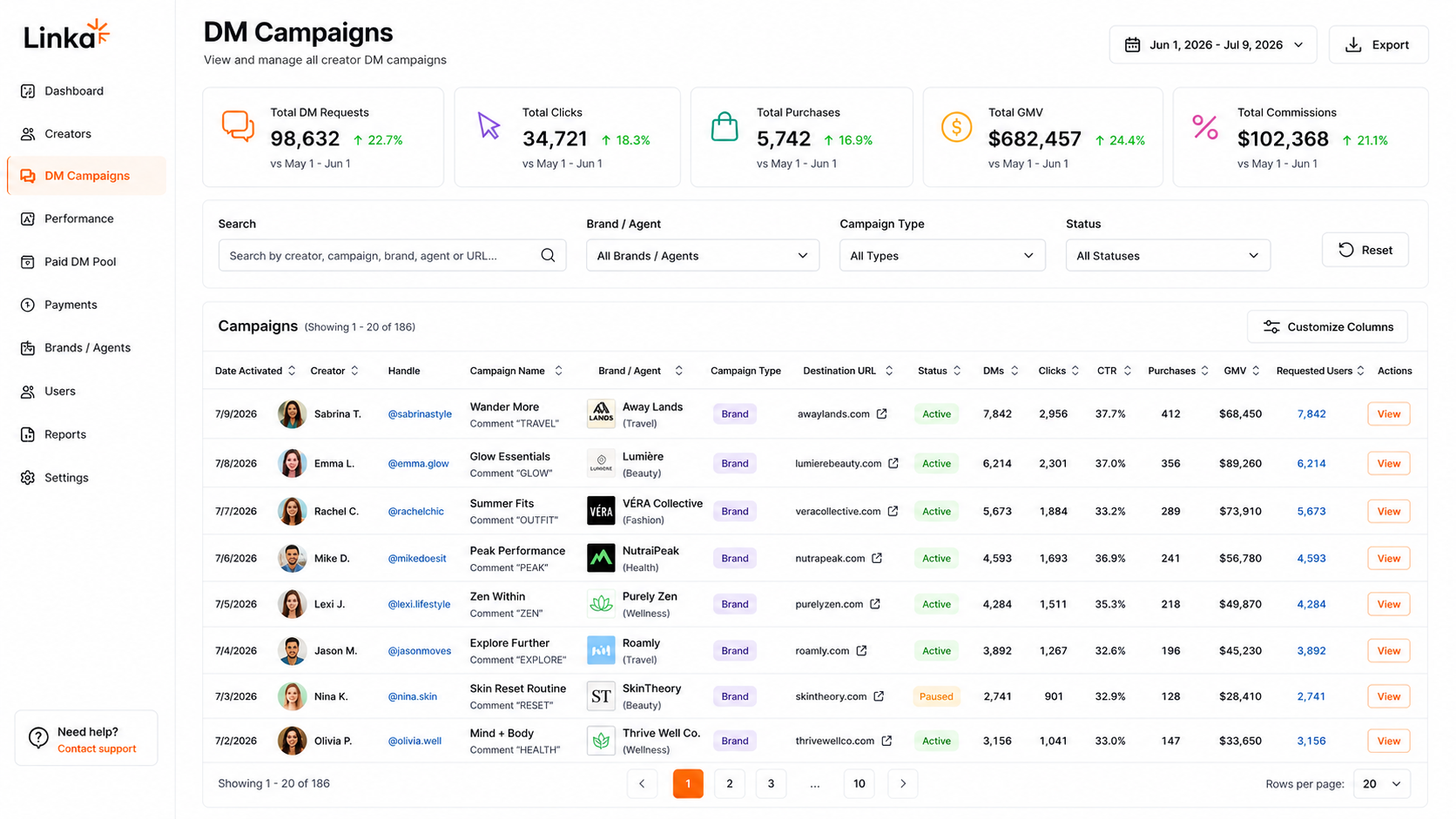
Linka handles this through Meta DM automation. A comment on a creator's Instagram post triggers a tracked direct message that carries the product, the offer and the next step, and the conversation continues from there rather than ending at a link. The qualified DM becomes a compensable event, so creators are rewarded for producing the conversation as well as the eventual sale.
From the direct message, shoppers move into a dynamic discount conversion page built for that campaign, holding the product, the creator's recommendation, the offer and a clear purchase path in one tracked place. Between campaigns, approved products live inside creators' AI Shops, an always-on multi-brand experience that answers buyer questions long after a post stops circulating.
What that produces for a brand trying to increase its average order value without discounting is a record of the hesitation itself. Which products draw the most questions? Which objections repeat across creators? Which explanations move somebody from the mid-tier option to the premium one, and which do not?
No platform, including Linka, can promise a sale. What changes is that the objection is no longer invisible. You can’t answer a question you never heard, and for most brands the hearing has never been part of the system.
The Better Option Needs an Advocate
Shoppers this year showed a real appetite for the more expensive thing. They spent more per item, bought fewer of them, and thought harder about each one.
That’s a generous market for any brand that can make the case. The catch is that the case has to be made at the moment of doubt, in language that answers one person's circumstances, and a caption written last Tuesday for a general audience was never going to manage it.
Handling price objections well is close to the difference between a campaign that lifts order value and one that simply reaches people. The conversation is where the trading up happens.
Want to know which price objections are costing you the premium sale? Book a call with Linka or explore Linka's affiliate marketing platform for brands to start capturing the price objections your captions never get to answer.

.webp)