.webp)
.webp)
A shopper asks an assistant which running shoe suits a wide foot and a heavy heel strike. Back comes a confident answer, a specific model, a link. They buy it eleven minutes later.
Somewhere upstream, a creator made that answer possible. AI product recommendations don't invent knowledge about how a shoe fits after four hundred miles, and Shopify's Q1 2026 commerce data shows how decided those shoppers already are by the time they arrive. More than half of AI-referred sessions start on a product page compared to roughly 20% for organic search, and those sessions convert at nearly 50% higher rates with average order values 14% higher. They're not browsing. They've been convinced. The convincing happened earlier, in reviews and comparisons and creator content, and by the time money changes hands there's no link with anybody's name on it.
The work got used. The credit didn't follow it.
Why AI Product Recommendations Need Your Content
An assistant has no opinion about how a fabric wears. It has no skin, no wide feet, no experience of a jacket in cold rain.
What it has is everything published on the subject, and a large share of the useful material comes from people who actually tried things and wrote down what happened. Long captions about why a product disappointed. Comparison videos. The comment where you explained that the sizing runs small and to go up one. That's the specific, experiential detail that makes a recommendation feel worth acting on, and it's the reason those shoppers land on a product page ready to buy rather than ready to research.
Shopify's data also showed AI-referred orders grew nearly 13 times year over year in Q1 2026, with referral sessions from AI chatbots up more than eight times. Orders grew faster than traffic, which means the shoppers coming through that route got better at converting, not just more numerous.
None of that traffic carries an affiliate link. The influence is real and the attribution is missing, which is a more extreme version of the problem in why last-click reporting makes the best creators look like the worst. At least last-click credits somebody. Here the credit dissolves entirely.
What's Actually Happening to Your Influence
Be precise about this, because it's easy to overstate.
Shopify's figures show that AI-referred shoppers arrive pre-qualified. They don't identify what qualified them. Creator content is one of the places that research happens, alongside review sites, forums, and retailer pages, and no public dataset breaks out how much of it comes from any single source.
What can be said with confidence is narrower and still worth caring about. Buying decisions are increasingly formed before anyone touches a trackable link, and the formative material comes from published content. If your entire monetization depends on somebody clicking your link at the moment they read your post, that model gets weaker every quarter, because more of the deciding is happening at one remove from you.
Posting more doesn't fix it. You'd be feeding the same machine faster.
How Creators Get Paid Inside AI Product Recommendations
The alternative isn't to stop publishing. It's to run your own version of the thing that's currently answering on your behalf.
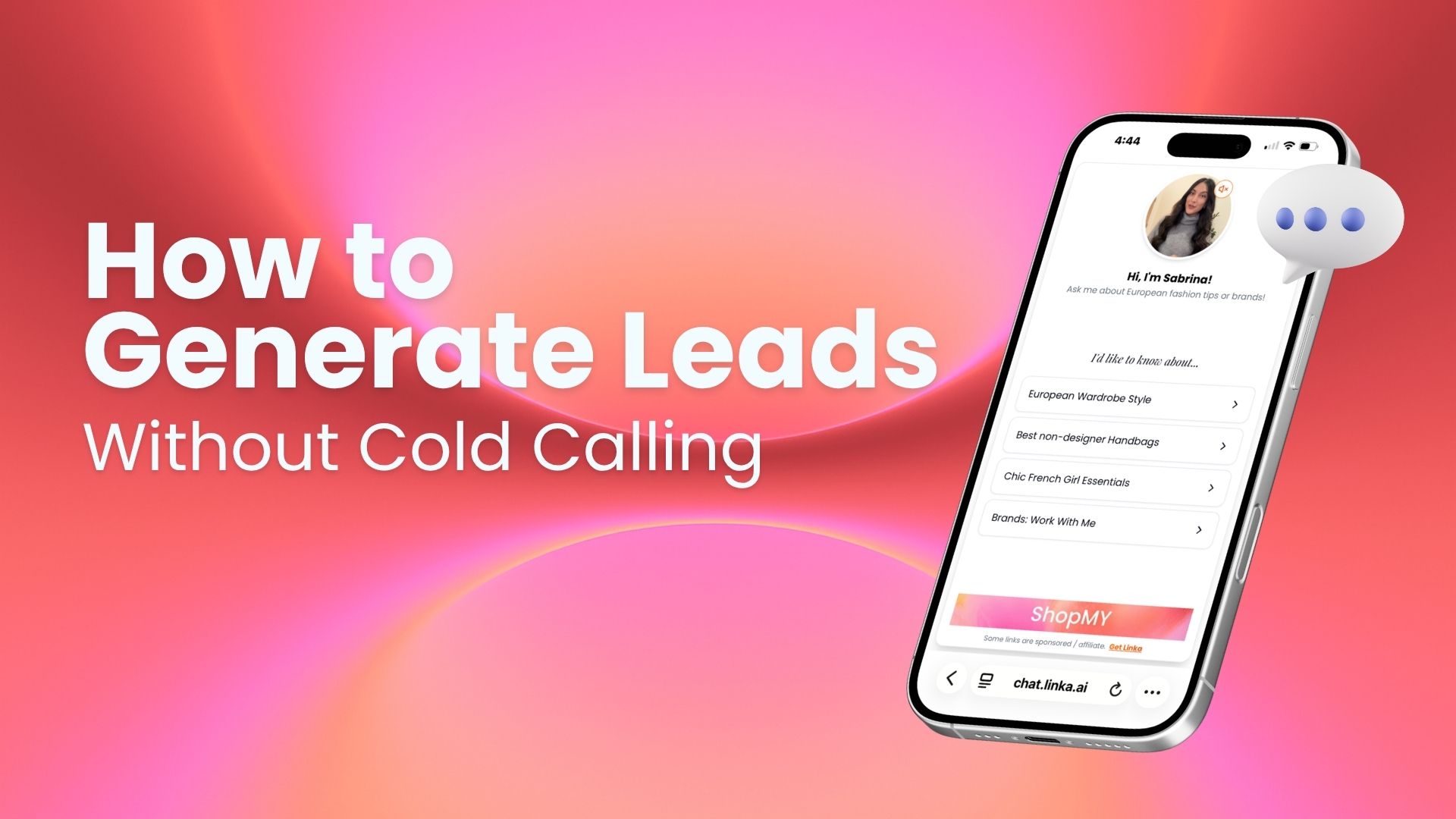
An AI Shopping Agent is an always-on shopping experience that sits in your DMs and holds products from brands you've approved. Someone finds your content, wants to know whether the jacket works for a wet climate or how the sizing runs, and asks. The agent answers from approved product information, in a space carrying your name and your affiliate tracking.
The difference from a general-purpose assistant is who benefits from the answer. A general assistant sends the shopper outward, across the open web, to a checkout with no relationship to you. Your shop answers inside your own space and keeps the connection intact through to the purchase.
The quality of those answers depends on what you feed it, which is the part most creators skip. Choosing which of your own content to train it on and testing the answers before deploying is the difference between a shop that sounds like you and one that sounds like a brochure.
Through Linka, the shop works alongside Meta DM automation, where a comment on your Instagram post triggers a tracked direct message carrying the product, the offer, and the next step. The qualified DM is a compensable event on its own, and affiliate commission stacks on top when a purchase follows. Shoppers move into a dynamic discount conversion page built for that campaign, so the path from question to checkout stays connected to you the whole way.
.png)
What Changes When the Answer Lives With You
With Linka's DM campaign setup, three things happen:
- Your archive keeps working, because a shop answers questions from content published months ago rather than letting an old post go quiet
- You earn on the conversation regardless of when the purchase lands, which matters when the deciding stretches over days
- The questions themselves show you what your audience actually wants to know, which is better product research than any analytics dashboard will give you
There's a fourth thing that's harder to measure and probably matters most. When a shopper asks you rather than an assistant, you stay in the relationship. The trust you built keeps compounding instead of being harvested by something that doesn't credit you.
Own the Answer, Not Just the Question
The uncomfortable read on the Shopify numbers is that the most valuable shoppers now show up already decided, and the deciding happens in places creators can't currently monetize.
The comfortable read is that the deciding still requires the kind of specific, tested, experiential knowledge that only comes from people who actually used the thing. That hasn't been automated and probably can't be.
So the content is still the asset. The question is whether it keeps answering on your behalf somewhere you have no stake, or somewhere you do.
Want AI product recommendations that pay you instead of routing around you? Join Linka as a creator and put an AI Shop where your audience is already asking.
.webp)