.webp)
.webp)
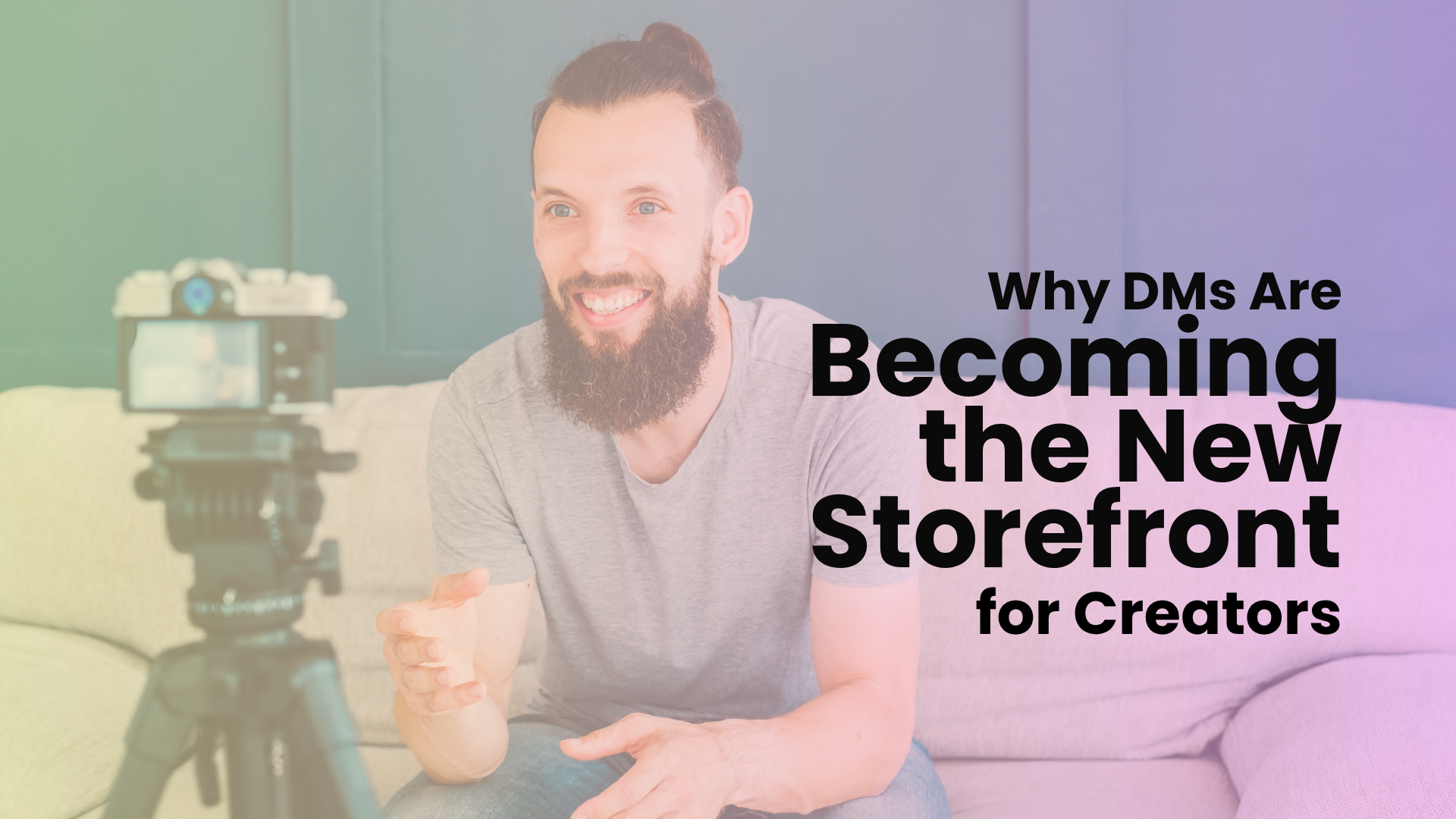
The most interesting shop of this decade has no window and no register. It’s an inbox. More precisely, it’s the thread between a creator and a follower who has just asked which harness holds up against a determined Labrador. Shops have always followed people. Main streets gave way to malls, malls to websites, websites to feeds, and now the feed is handing off to the direct message, where a recommendation feels less like an ad and more like a text from a friend who happens to know.
Three forces push the shift along. DMs build trust through a real one-to-one exchange. They keep their answers long after a Story has vanished. Instagram keeps making messaging more central to the whole experience. For creators in ordinary niches, the questions already piling up in the inbox are foot traffic nobody has bothered to count. This is the story of why that is happening and what a DM storefront actually contains.
What Is a DM Storefront?
A physical shop has a door, a salesperson, and shelves. The direct-message version has the same anatomy, only rearranged, and learning to see it that way is the first step toward turning an inbox into income. To monetize Instagram DMs, you mostly need to recognize the shop you already have.
The Doors Are Scattered All Through Your Content
Each one is an invitation that funnels an interested follower into a private thread. A Reel that says “comment COFFEE and I’ll send my whole setup.” A Story that offers “reply LIST for everything in this room.” A Live where you promise the full rundown by DM afterward. Every one of those is a doorway, and most creators keep a dozen of them open without realizing it.
The Salesperson is the Conversation Itself
At a small scale, that salesperson is you, answering each message by hand. At real scale, it has to be partly automated. A comment-to-DM campaign delivers the promised link to every commenter the instant they raise a hand, and an AI agent can handle the follow-up questions, the “is it machine washable?” and “which size for a forty-pound dog?” that decides whether a sale actually happens. Done well, every follower gets the personal-shopper treatment even when ten thousand arrive at once.
The Shelves Are Your Curated Recommendations and the Offers Behind Them
This is where the metaphor turns literal, because the DM has to send people somewhere. A single product link works for one specific ask. For broader curiosity, creators point to a storefront, one shoppable page holding everything they recommend. Behind each item sits an affiliate offer, so when a follower clicks and buys, the creator earns a commission.
AI Can Be Integrated
The distinction between a basic keyword trigger and a genuine AI agent is worth making, because most creators who have tried DM automation have tried the scripted version and found its ceiling quickly. A scripted bot fires the same message to everyone who types a keyword, which handles volume but fails the moment someone replies. The AI layer is different in kind.
Linka's agent can scan the content inside your actual Reels, which means when someone gets the harness link and comes back with "does the clip hold up on a dog who reverse-pulls?" the response draws on what was actually in the video, not a generic FAQ. The difference between a canned reply and a contextual one is whether the follow-up question becomes a sale or a silence. For most creators, follow-up questions are where the majority of conversions either happen or expire.
Why the Inbox, and Why Now?
Your inbox helps to understand why buying conversations are migrating into private messages. Public feeds are built for discovery, for the wide cast that finds new people. The questions that come right before a purchase, the ones about fit and fabric and whether the thing is worth the money, are the questions people would rather ask quietly. The DM is where hesitation gets resolved, and a resolved hesitation is what a sale really is.
The link-in-bio era asked a great deal of the followers. It made them leave the post, find your profile, tap a crowded list, and hunt for the one thing they wanted, shedding a share of people at every step. The DM reverses the burden. The link comes to the person while the want is still warm, which is the difference between a recommendation that converts and one that gets opened tomorrow out of politeness, if at all.
Brands worked this out years ago, which is why their support and sales operations keep drifting toward messaging. For a creator, the same logic points to an enormous and mostly unclaimed opportunity. You already have an open channel with thousands of people who chose to follow you. What has been missing is a way to run commerce through it without typing every reply yourself.
What It Feels Like on the Other End
The follower’s experience is the reason your inbox works, so it’s worth sitting with. Compare two paths:
- A follower sees your alpine itinerary, wonders which booking site you used, scrolls your bio without finding it, and gives up.
- Your caption says “comment ALPS and I’ll send you everything,” they comment, and ten seconds later a DM lands with your recommendations, ready for their next question.
One of those feels like marketing. The other feels like texting a well-traveled friend, and the second one is the one that converts.
There’s a measurement benefit hiding in the channel too. Public metrics tell you what people will admit to liking. Private questions tell you what they actually intend to buy. A creator running these conversations learns, week by week, which products her audience asks about, hovers over, and finally purchases, and that knowledge feeds back into what she makes next in a way a like count never could.
How a Creator Actually Builds a New Storefront
This is where Linka enters, because it packages the whole storefront into one free partner program rather than a pile of separate tools.
The mapping runs one-to-one with the shop’s anatomy. The doors are comment-to-DM campaigns, so any Reel, post, Story mention, or Live can carry a keyword that delivers links to every commenter, around the clock. The salesperson is the set of AI Sales Agents that answer follower questions and recommend relevant products, so curiosity converts instead of expiring in an unanswered thread.
The shelves are a Linka Store, one shoppable page for your recommendations. The till is access to more than 32,000 brand offers across pet, lifestyle, beauty, health and wellness, travel, fashion, and home, which means the products your audience already asks about can become offers you earn from.
For a pet creator, the day looks refreshingly unchanged. She still posts the golden retriever destroying a new toy, still goes Live from the dog park, still answers the sweet messages by hand when she can. What changes sits underneath. When two hundred people comment HARNESS, two hundred DMs go out with the right link, the follow-up questions get answered, and the purchases that follow pay her commissions. The shop stays open whether she is online or asleep, which is the whole point of having a shop.
What Does the Storefront Actually Track?
Knowing the shop is open is one thing. Knowing what it's teaching you is another. Public analytics they tell you a post landed well or a Reel got shared, but they don't tell you what happened after the tap. Purchase intent lives in the conversation, not the caption, and it mostly goes unrecorded.
Linka tracks clicks, conversations, and conversions across every agent placement in real time, giving creators the kind of operational signal that used to require a large team or expensive research. After a few weeks of running campaigns, the data reveals things most creators have never been able to see:
- Which pieces of content are generating buying conversations, not just engagement
- Which products are converting after follow-up questions get answered
- Where exchanges are stalling before a sale closes
- How your highest-converting content compares to your most-liked content (they're often not the same)
- Which product categories your audience shops most heavily, so you can weight your Linka Store accordingly
How Do DM Storefronts Work Across Niches?
The same pattern repeats across niches. Swap the harness for a beauty creator’s holiday tutorial and the keyword becomes GLAM, with shade questions answered overnight. Swap it for a home account’s small-apartment storage tour and the DMs carry bin dimensions and the exact shelf brand. The content differs, the audience differs, the flow stays identical, questions arriving and each one finally landing somewhere it can earn.
It costs nothing to set up, since the program is free for active partners, and it doesn’t require an audience of millions. It requires an audience that asks, which most engaged small accounts already have. Micro-influencer earning has always been bottlenecked by infrastructure rather than by trust, and this removes the bottleneck without asking the creator to become a different person.
Every conversation teaches the storefront something. The questions followers ask reveal which products to feature next, which worries keep recurring, and which recommendations actually convert. A creator who runs DM commerce for six months ends up with something most brands would envy, a precise, firsthand map of what her audience wants to buy and what makes it hesitate.
What Should Creators Do Now?
The DM storefront rewards the early and, gently at first, punishes the indifferent. Creators who wire up their inbox teach their audience the habit of commenting for links, watch their old content keep selling, and gather richer data on what their followers actually buy. Those who wait will adopt the same tools eventually, after spending the intervening months sending unmonetized links and letting intent evaporate.
The first move is small, and the shop grows one door at a time. Pick the question your followers ask most, and build a single keyword campaign around it this week. Watch what happens when the answer arrives instantly, carrying a link that pays you. Add a second doorway the week after, a Story reply prompt or a Live with a keyword, and let the threads accumulate.
Shops are built one entrance at a time. The first takes an afternoon, and unlike any storefront on any street, this one never pays rent, never closes, and gets a little smarter with every conversation it holds. The deeper point is worth sitting with. You do not have to build an audience that shops. You already have one. People ask what to buy because they trust your judgment, and that trust is the real estate. The inbox is simply where it finally gets a cash register.
Creators, affiliates, bloggers, and publishers can join the Linka Partner Program for free and start earning from recommendations, DM campaigns, and brand offers.

.webp)