
.webp)
.webp)

Every partnership your brand signs is a bet on a relationship, and the terms of that bet decide who carries the risk. A performance-based commission structure moves the risk off your budget and onto the outcome, so you stop paying for the possibility of a sale and start paying for the sale itself. It's the difference between renting a billboard and hiring a salesperson who only invoices you for what they close.
We built Linka around that second model, and we've watched it change how brands think about creator and publisher spend entirely. When money only moves after results do, a lot of familiar marketing anxiety simply disappears.
What Does a Performance-Based Commission Structure Actually Mean?
A performance-based commission structure means partners earn a percentage of what a campaign actually generates, rather than a flat rate for reach or a one-time fee for a post. The creator or publisher gets paid when a tracked click becomes a tracked sale, a booking, or a qualified lead, and the payout scales in direct proportion to the value delivered.
That mechanism does something subtle to the whole relationship. Because earnings follow outcomes, partners naturally push the products that sell and the content that persuades, and your budget stops subsidizing pretty numbers that never touch the revenue line. A well-designed commission structure for brands works as an alignment tool as much as a pricing choice, pointing every partner's effort at the same goal yours is pointed at.
Why Do Brands Still Default to Paying for Reach?
If outcome-based pricing is so obviously better, why does reach still dominate so many deals? The cause and effect is mostly historical. Reach was the only thing anyone could reliably measure, so it became the negotiating currency, and follower counts and impression estimates turned into price tags because they were simple to quote and compare. The habit outlived the limitation, and plenty of brands now pay for exposure out of routine rather than evidence.
The comfort of reach-based deals hides real costs. Brands that default to paying for exposure typically end up:
- Rewarding audience size instead of audience trust
- Spending the same on partners who convert and partners who don't
- Negotiating from vanity metrics with no reliable link to sales
- Learning nothing about which content or channel actually earns
Meanwhile, the money in this channel keeps growing, which raises the stakes of structuring it well. eMarketer projected that US affiliate marketing spending would exceed $12 billion in 2025, and every dollar of that spend flows through some commission design, good or bad. A performance-based commission structure replaces the old routine with evidence, which is why the shift to pay for results not reach keeps accelerating.
What a Results-Based Campaign Looks Like in Practice
Consider a wellness brand we'd call typical of what arrives on Linka. Before, its playbook was flat-fee creator posts. The brand would pay upfront, watch the impressions roll in, and squint at a sales chart afterward hoping to spot a bump. Reach was strong, comments were warm, and attribution was a shrug, so the marketing team could never say which of its twelve partnerships earned back its cost.
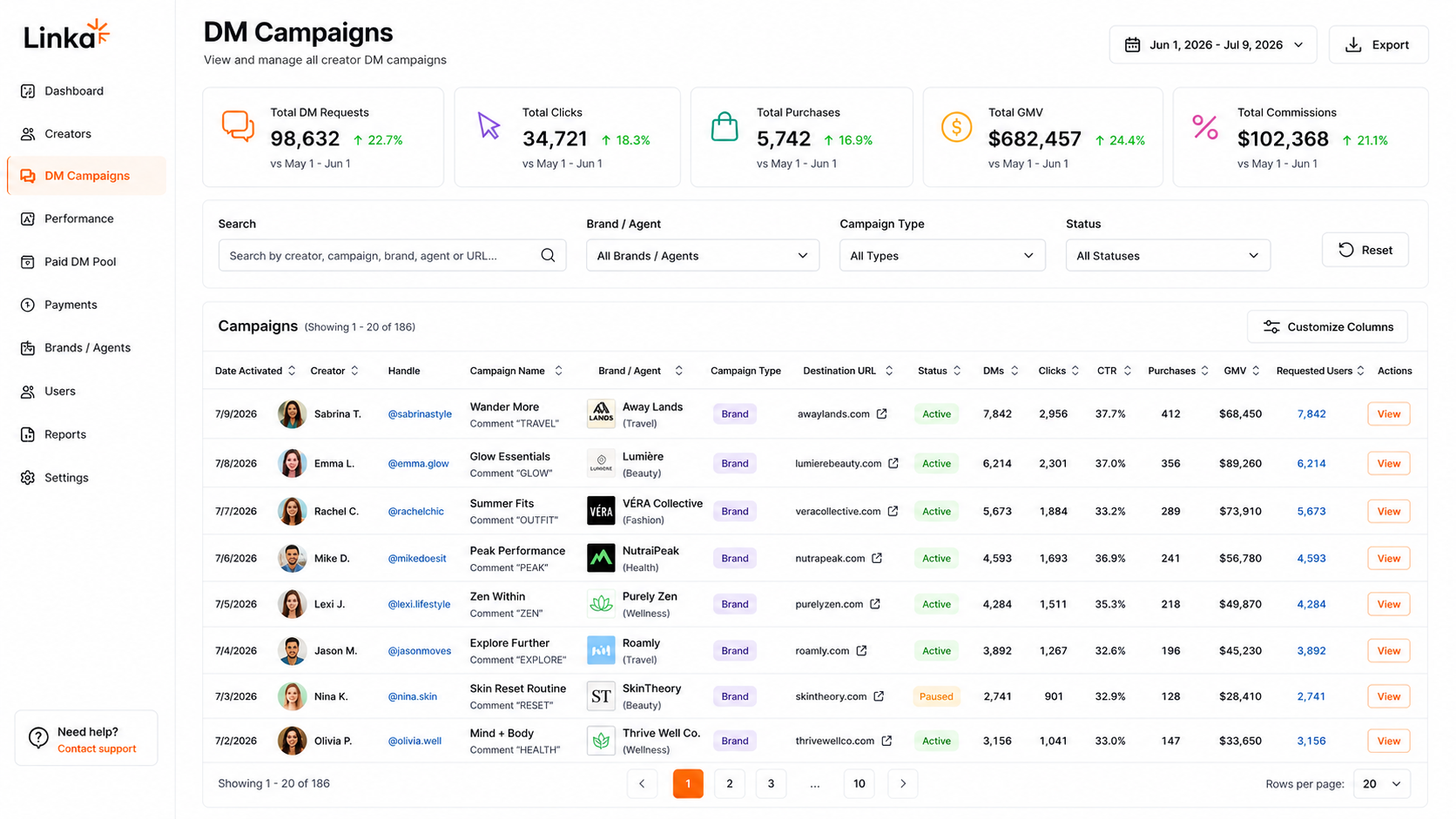
When brands join Linka, they add a conversion layer and rebuild their deals around a performance-based commission structure. The same creators keep posting, but now audience questions trigger instant DM conversations with product links inside, every click and purchase is attributed to its source, and partners earn a share of what they personally convert.
Under the CPDM™ model, the qualified DM conversations themselves become a payable outcome alongside the commission, so the brand is buying engagement with demonstrated intent rather than exposure. Brands can then see precisely which partners drive most of the revenue, move budget toward them, and cut spend that had been decorating reports instead of driving sales.
How to Structure a Commission Rate That Works
There's no universal number, and pretending otherwise is how programs stall. Designing a performance-based commission structure comes down to three decisions made deliberately:
- Base It on Category Norms: Affiliate commission rates by industry vary widely, since high-margin digital products can support generous rates while travel and hospitality typically pay less per booking on larger order values. Study creator commission benchmarks in your vertical, then set a rate where a motivated partner earns meaningfully and your unit economics still hold.
- Consider a Tiered Structure: Tiered affiliate commissions raise the rate for creators or publishers who consistently convert, which rewards your best partners and gives everyone else a visible ladder to climb.
- Decide What Counts as a Conversion: A completed sale, a booking, a qualified lead, or a qualified DM conversation can each anchor the payout, but the definition has to be set clearly upfront, because ambiguity here is where partner trust goes to die.
Questions Brands Ask About Commission Design
How High Should Our Commission Rate Be
High enough that your best partners prioritize you, low enough that margins survive success. We generally suggest starting from your category's norms and your customer lifetime value, then adjusting with real conversion data instead of guesswork.
Can We Keep Our Existing Affiliate Program
Yes. We connect to the program you already run or launch one for you, and either way the performance-based commission structure you design gets enforced automatically across every partner in the network.
Does Paying Only on Conversion Scare Partners Away
It filters more than it scares. Partners with real audience trust prefer pay only on conversion terms because their upside is uncapped, while partners who can only deliver reach tend to pass, which tells you something useful before any money moves.
What Brands Get From a Performance-Based Commission Structure
The structure is the strategy, but the operations are what make it livable, and this is where a performance pay affiliate program either scales or suffocates under spreadsheets. Our platform handles the weight so a performance-based commission structure runs itself:
- Linka Launches and Manages the Program: Onboarding, tracking, and DM campaign distribution across more than 10,000 creators and publishers, handled without manual campaign management.
- Products Appear Inside Real Conversations: Your offers are matched to user intent as questions come in, so recommendations land at the moment someone is deciding.
- Automated Earnings and Payouts: Commissions are calculated from actual results as a percentage of tracked revenue, and automated commission payouts remove reconciliation from your team's calendar entirely.
The payoff shows up where your CFO looks: affiliate program ROI becomes a real, defensible number, because every dollar out maps to tracked revenue in. Launch a performance-based affiliate program with us, and start paying for what your campaigns close instead of what they display.

.webp)