.webp)
.webp)
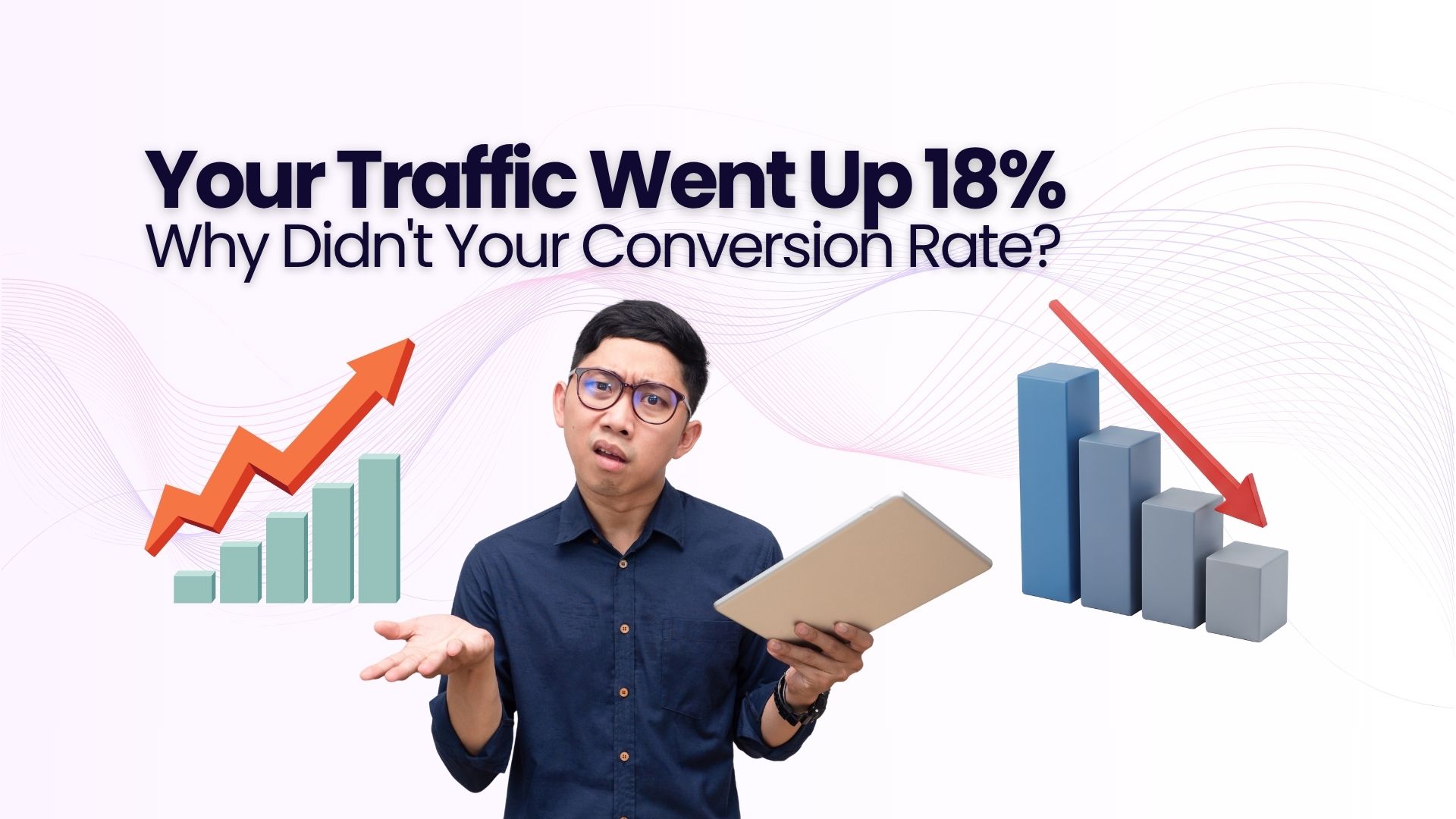
If you're running a brand, you may have seen that quarterly review where every chart points up and the revenue line doesn't move. Traffic is healthy and engagement is fine, but somehow the orders are flat.
That's not a local problem, and it isn't your website's fault. Salesforce's Shopping Index found global digital traffic grew 18% in the second quarter of 2026 while order volume rose just 1%, with cart abandonment sitting at 82%. More people are showing up and roughly the same number are buying, which means the conversion rate problem most brands are treating as a checkout issue is really a gap in the middle of the journey. Shoppers arrive interested, hit a question nobody answers, and leave to go resolve it somewhere else.
Getting seen and getting bought have become two different achievements.
What an 18% Traffic Increase Is Actually Telling You
It's tempting to read flat orders as weak demand. The rest of the Salesforce data argues otherwise.
Mobile now carries around three quarters of all online traffic, and social drove 29% more ecommerce visits in the second quarter. People aren't disengaged. They're arriving in enormous numbers, on small screens, from channels where they were already half-persuaded by somebody they follow.
What's changed is where the deciding happens. Salesforce found year over year engagement on brand-owned properties fell 7%, while reported use of traditional search engines and online marketplaces each dropped 15%. Meanwhile the newer routes, AI assistants and social, surged 38%. Reliance on an AI assistant as the first stop in a shopping journey grew 200% between May 2025 and May 2026, with half of shoppers now reporting they use one.
So the traffic is real, but it's just arriving later in its own process and with more of its thinking already done elsewhere. A visitor who has already asked four questions somewhere else shows up with a fifth one, and your product page has no way to hear it.
Where the Conversion Rate Breaks
An 82% cart abandonment rate is usually treated as a checkout optimization problem. The usual list includes shipping costs, form length, and guest checkout.
Those things matter at the margin. They don't explain a number that high. A shopper who has added an item to a cart has already decided they want it. Something between wanting and paying stopped them, and in most cases it's an unresolved question rather than a badly designed button.
This is the same structural gap that widens the distance between the click and the purchase. Brands buy attention at the front and pay commission at the end, and the stretch in between belongs to nobody. When traffic grows 18% and orders grow 1%, that unowned stretch is where the difference went.
The uncomfortable part is that the stage isn't invisible because it's unimportant. It's invisible because nothing in a standard reporting stack was built to see it, which is exactly the argument for treating the conversation as a distinct funnel stage rather than a gap between two others.
How to Fix a Conversion Rate You Can't See Into
You can't improve a step you have no visibility on. So the work starts by making the middle of the journey produce data.
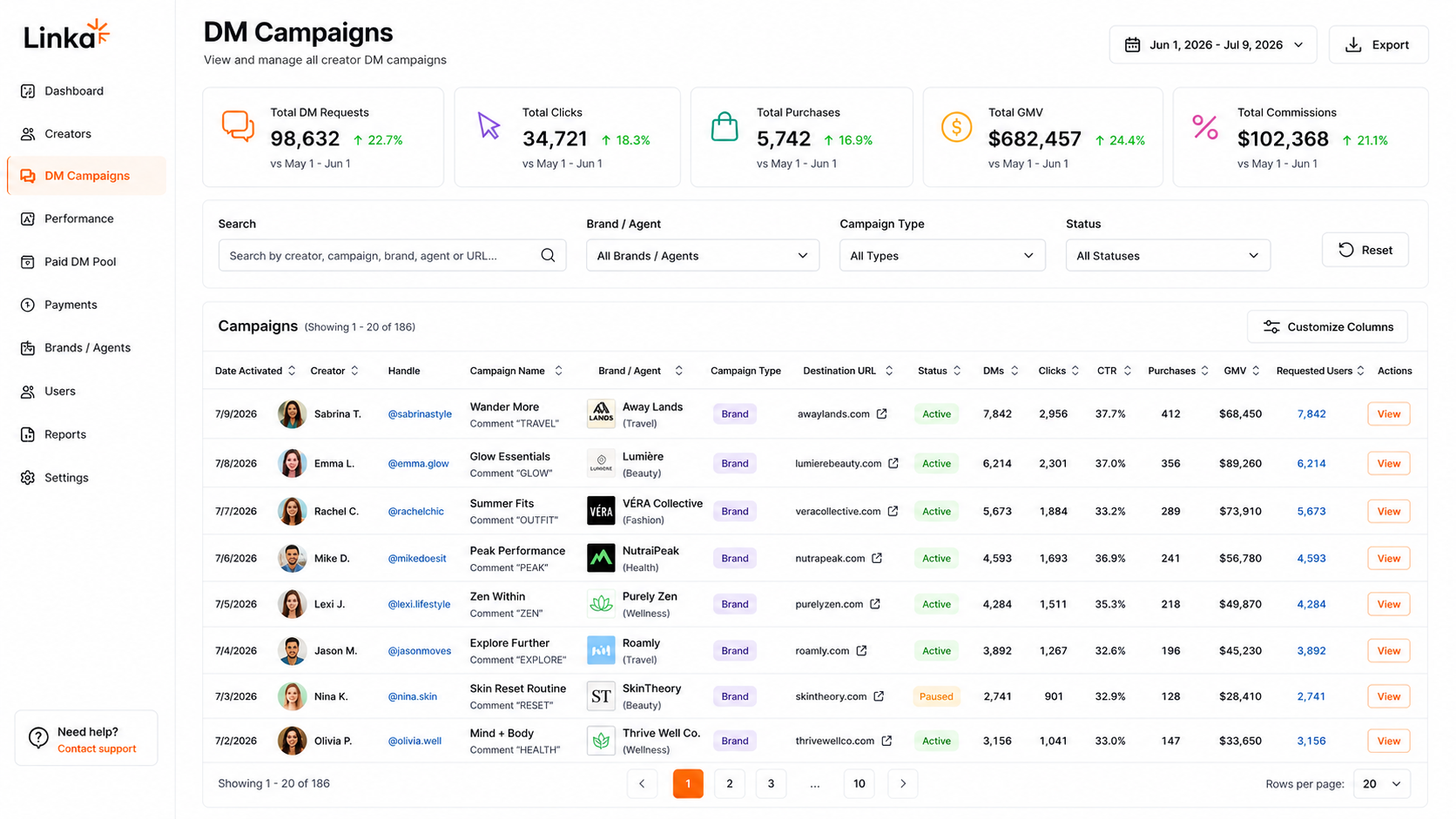
Linka approaches this by treating the conversation itself as a measurable performance event. Through Meta DM automation, a comment on a creator's Instagram or Facebook post triggers a tracked direct message carrying the product, the offer, and a clear next step. The shopper's question gets asked and answered inside the campaign rather than out on the open web.
From there they land on a dynamic discount conversion page built for that campaign, holding the product, the creator's recommendation, the offer, and the purchase path in one tracked place. Code copies, clicks, leads, and purchases all register against the campaign that created them. Between campaigns, approved products live inside creators' AI Shops, so questions arriving days later still find an answer.
For a brand staring at a flat conversion rate, that produces three things worth having.
- A record of what shoppers asked before they either bought or disappeared
- A compensable event inside the consideration window instead of only at either end of it
- Attribution that follows a buyer from comment to conversation to checkout, rather than crediting whoever happened to be standing closest to the register
Brands can also connect existing creator relationships through AWIN, Rakuten, CJ, Impact, Shopify, or a direct product feed, so none of this requires abandoning the network you already run.
No platform, including ours, can guarantee sales. However, Linka enables a narrower and considerably more useful vehicle for generating sales. You no longer need to guess why the traffic didn't convert.
What to Do Before the Holiday Quarter
If your Q4 plan is built on driving more visits, the second quarter numbers suggest you'll get them and they won't help much.
The scarce thing this year isn't attention. It's resolution. An 18% traffic increase producing a 1% order increase is a market telling you, fairly loudly, that the bottleneck moved and the budget hasn't followed it yet.
Somewhere in that gap a shopper asked whether it would arrive before the holidays, and nobody was there to say yes.
Want to know why your conversion rate isn't following your traffic? Book a call with Linka or explore Linka's affiliate marketing platform for brands to make the middle of your funnel visible before the holiday quarter starts.

.webp)