.webp)
.webp)
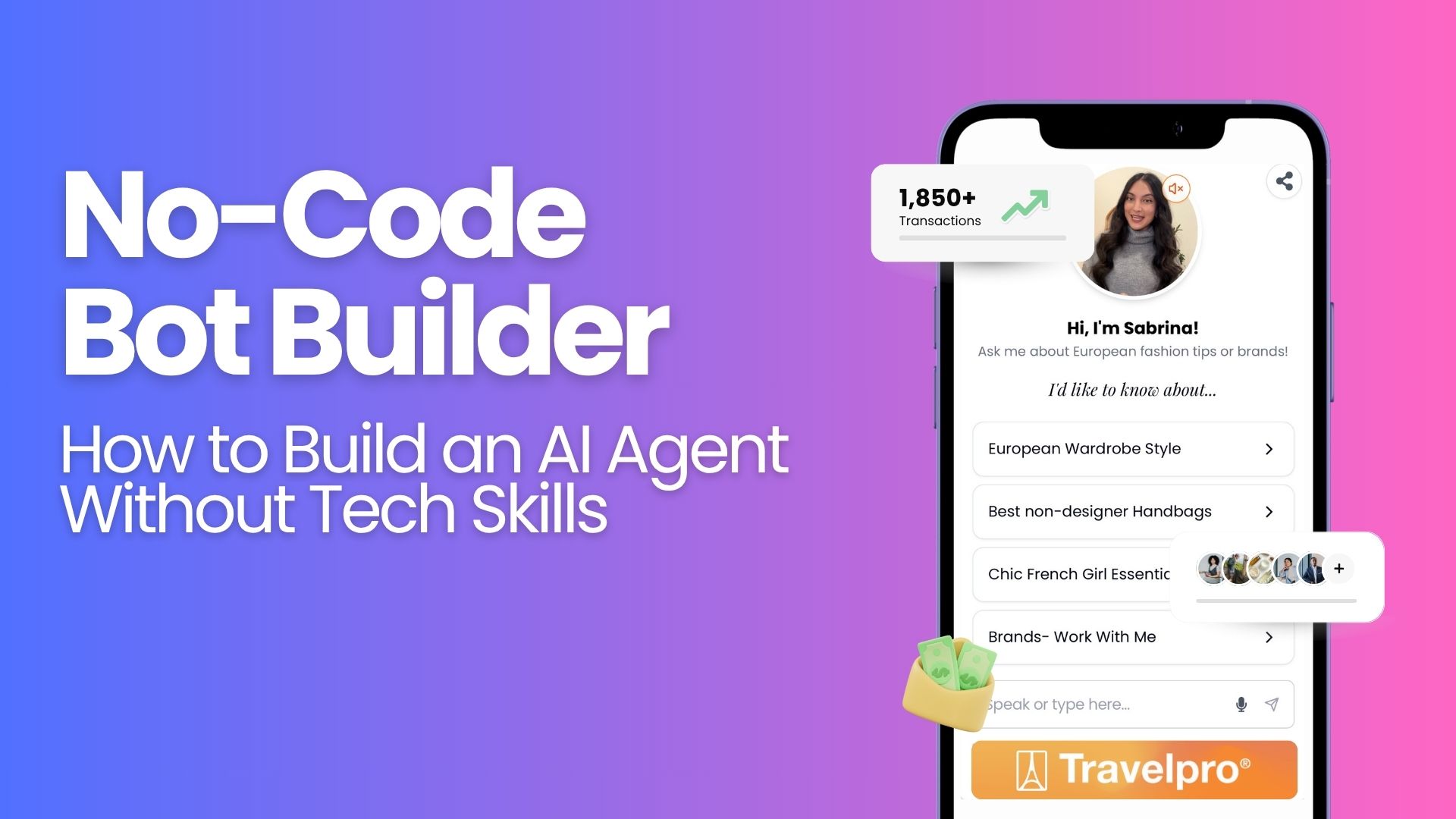
You don't need to know how to code to have an AI agent working for your business. That sentence would have sounded like a sales pitch a few years ago. In 2026, having a no-code bot builder is simply how the tools work.
These platforms are designed specifically for people who have real expertise to offer but no appetite for learning software development to offer it. A coach, consultant, creator, solo service business owner, or anyone with something valuable to say and a customer base that needs to hear it can have an AI agent running without writing a single line of code.
Understanding what this tool actually does, and how to find and use the right one, is one of the more practical AI decisions you can make right now. It can completely change your sales process — not as a future possibility, but as something already running in a growing number of your competitors' businesses.
What Is a No-Code Bot Builder and Who Is It For?
A no-code bot builder is a platform that lets you create, train, and deploy a chatbot or AI agent through a guided interface without coding, a developer, or a command line. Instead of writing scripts or programming logic, you provide content from your website, offer descriptions, FAQ answers, and preferred tone. The platform handles everything technical underneath.
These tools exist on a spectrum. At the simpler end, you'll find flow-based builders that let you design scripted conversation paths using drag-and-drop logic. At the more capable end, you'll find AI-powered platforms that train agents on your actual content and allow them to respond intelligently to questions the script never anticipated.
What Does a No-Code Bot Builder Do?
For coaches, consultants, service business owners, and creators, the most relevant applications include:
- Lead Capture and Qualification: An agent deployed on your website or bio link that greets visitors, asks a few qualifying questions, and routes serious prospects to a booking link or follow-up sequence without any manual involvement.
- FAQ and Offer Explanation: An agent that handles the repetitive questions that eat up your inbox (e.g., how does this work, what's included, is this right for my situation, how much does it cost), so you stop answering the same things daily.
- Booking and Consultation Routing: An agent that understands the difference between your offer types and guides each visitor toward the one that fits their situation, rather than sending everyone to a generic contact form.
- Affiliate and Product Recommendations: For creators and publishers, an agent that surfaces relevant links, partner offers, and content recommendations based on what the visitor is actually asking about.
- 24/7 Sales Coverage: The most straightforward application that has something intelligent available when you're not, so the lead who shows up at midnight doesn't bounce without a response.
Why the Difference Between a Scripted Bot and an AI Agent Matters
Not every no-code bot builder produces the same kind of output. A scripted bot follows a fixed decision tree. If the visitor says one of the expected things, the bot delivers the corresponding pre-written response. If the visitor says something the script didn't anticipate, the bot either delivers a fallback message or loops back to the beginning. This works adequately for simple, linear scenarios. It breaks down the moment a real conversation introduces nuance, which is most of the time.
An AI-powered agent works differently. It understands natural language, which means it responds to what a person actually said rather than to a keyword match. It can handle an unexpected question, acknowledge a complex situation, and give an answer that's useful in context rather than just technically present.
The practical test is simple: can your agent handle the sentence "I'm not sure which of your options is right for my situation"? A scripted bot will usually return something generic. An AI agent trained on your offers will ask a follow-up question, explain the distinction between your options in plain language, and guide the person toward the right path. One of those interactions builds trust. The other erodes it.
How Do You Actually Build an AI Agent Without a Technical Background?
The build process for a no-code bot builder varies by platform, but the core steps follow a consistent pattern that any business owner can work through without technical help.
Decide on One Job for the Agent to Do First
The most common mistake in building a first AI agent is trying to make it do too many things at once. Start with one primary function — qualifying leads, explaining your main offer, handling your most frequently asked questions — and build around that. A focused agent performs better and is easier to test and improve than an agent tasked with handling every possible scenario from day one.
Feed It Your Business Knowledge
This is the training step, and it's where no-code bot builders earn their name. Rather than writing code to program responses, you give the platform content from your website pages, service descriptions, FAQ document, pricing information, and past client questions. Linka scans this content automatically and builds the agent's knowledge base from what you've already created rather than requiring you to start from scratch.
On Linka, you can point the platform at key webpages and it will scan them automatically to understand what you sell and how you talk about it. You can also drop in voice notes where you explain your offers, pricing, or policies in your own words, so the agent learns from the way you naturally speak, not just from polished marketing copy.
Set the Voice and the Boundaries
An agent that sounds generic undermines the trust your brand has already built. Most no-code bot builders let you write a brief set of instructions that define how the agent should communicate (e.g., formal or conversational, detailed or concise, etc.), which topics to engage with, and when to escalate to you directly.
For example, an online fitness coach might instruct their agent to use encouraging, straightforward language, to avoid giving specific medical advice, and to always offer a booking link when someone expresses interest in personalized programming. Those instructions take ten minutes to write and shape every conversation the agent has from that point forward.
Deploy It Where Your Audience Is
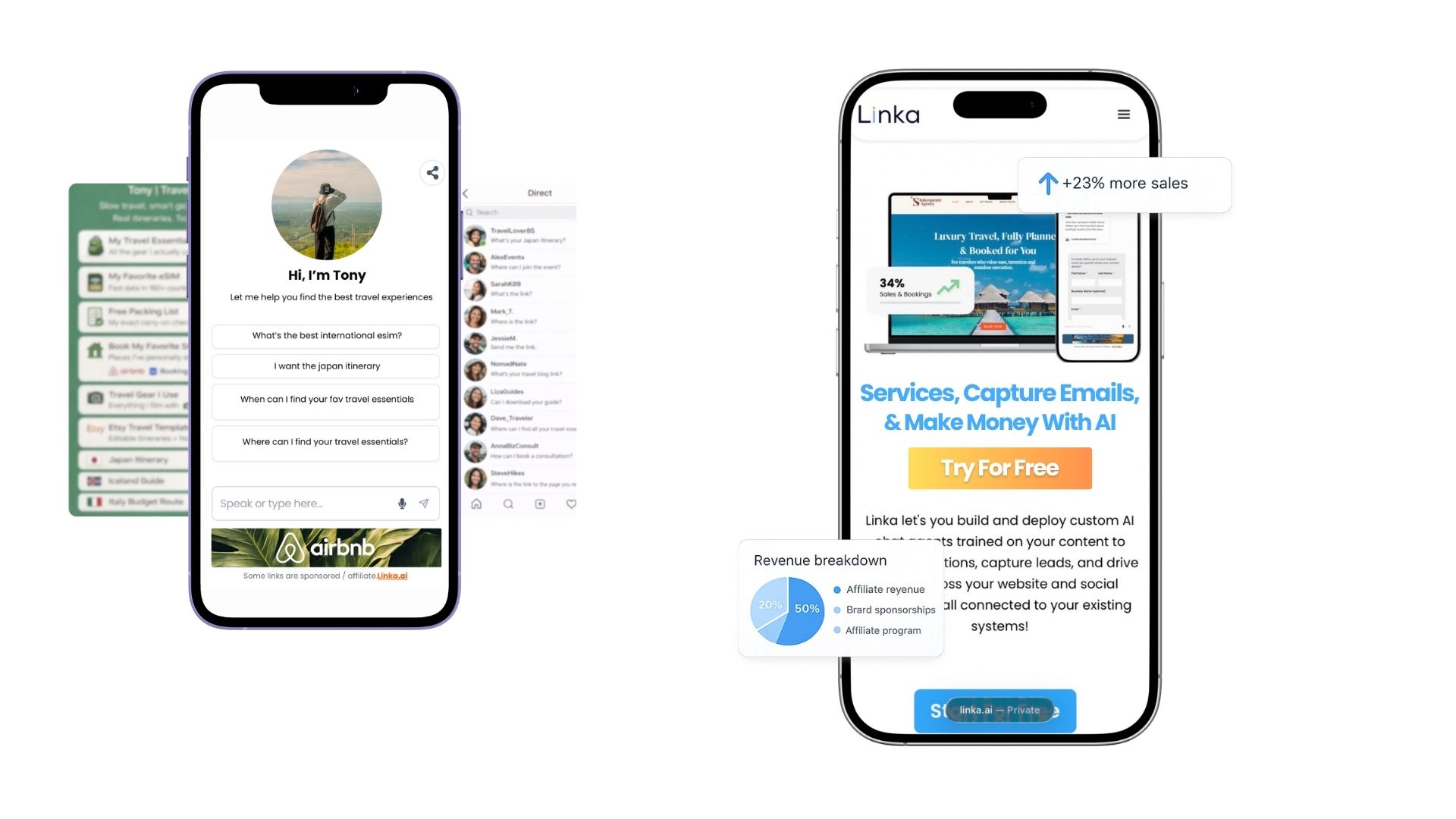
A no-code bot builder typically offers a few deployment options, such as a widget that appears on your website, a link that opens a standalone chat interface, or a DM integration for platforms like Instagram. Most require either a short embed code or a single link, which even the least technical business owner can implement without assistance.
A modern no‑code bot builder should also follow your audience into the channels where they actually interact with you. Linka lets you turn Instagram comments and keyword‑triggered DMs into real‑time AI‑powered conversations that answer questions, share links, and guide followers to book or buy automatically.
Test It Before It Goes Live
Run through the conversations your potential clients are most likely to have. Ask the questions they ask. Try the unusual ones too. Where the agent stumbles, either add that content to its knowledge base or refine the instructions that govern its behavior. This review step, done before launch and revisited regularly afterward, is what separates a useful agent from one that frustrates more visitors than it helps.
What Should You Look for in a No-Code Bot Builder?
The market for these tools has grown considerably, and not all of them are equally suited for service business use. When evaluating a no-code bot builder, the criteria worth weighing are:
- Natural Language Understanding: The platform should respond to what someone actually says, not just to expected keywords. If it requires scripting every possible response, it's a flow builder, not an AI agent.
- Content-Based Training: You should be able to feed the platform your existing website, documents, and offer descriptions rather than manually programming responses one by one. This is what makes setup fast and updates manageable.
- Voice and Tone Control: You should be able to give written instructions that shape how the agent communicates, so it represents your brand rather than sounding like every other chatbot on the internet.
- Multi-Channel Deployment: This is the ability to place your agent on your website, your bio link, and your social channels from a single platform — rather than rebuilding it for each one separately.
- Conversation Analytics: You should have access to what your agent is being asked, where conversations are dropping off, and what's converting. This data is what makes the agent better over time and what tells you what your audience actually wants.
- Integration With Your Existing Tools: You should have a connection to your calendar, CRM, email platform, or payment processor so the agent's conversations can trigger real actions rather than just collecting information.
What Goes Wrong When People Build Their First AI Agent?
The no-code bot builder category has made building an agent genuinely accessible, but accessible doesn't mean automatic. The most common issues that surface in first builds tend to follow recognizable patterns.
Trying to cover everything immediately produces an agent that covers nothing particularly well. The narrower the starting scope, the faster the agent reaches a useful level of quality.
Skipping the voice instructions produces an agent that sounds correct but doesn't sound like you, which creates a subtle disconnect for visitors who arrived because of your content and your personality.
Not testing with real questions before going live means the first real conversations with potential clients are also the first time you discover what the agent gets wrong. Running through a realistic conversation or two before launch saves real relationship capital.
Not revisiting the analytics after launch is the most common long-term mistake. The questions your agent receives are a live signal of what your market wants and what your current messaging isn't clearly answering. Treating those logs as a regular review task rather than a one-time setup step is what turns a functional agent into a consistently improving one.
Build Your First AI Agent With Linka
A no-code bot builder removes the technical barrier that kept AI agents out of reach for most service businesses. What remains is a setup process that runs on your own knowledge of your business, your offers, and your audience.
Explore the Linka demo to see how our team helps coaches, service professionals, and creators build AI agents that run on their websites and social channels in their voice, without any developer involvement.
The setup takes an afternoon. The upside is a sales channel that works while you sleep. Get started →
.webp)